
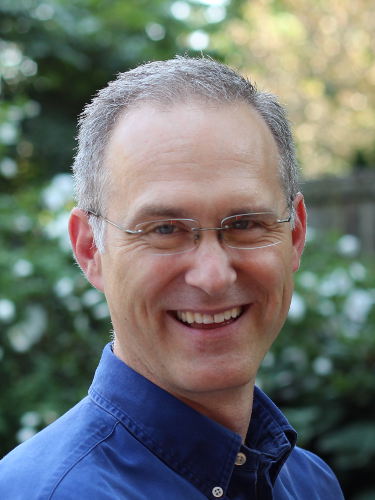
Vinod Jain works as a technology and management consultant in Northern Virginia. In this conversation we explore how get got to where he is today and the personal journey he is on.
Podcast: Download
Subscribe: Apple Podcasts | Android
Conversation Highlights
- Bigger Game Live put on by Rick Tamlyn
- Being a “creator” instead of a “consumer”
- “Express and receive”
- The pros/cons of enthusiastic optimism
- We all have the potential for a great future in our lives
- Look around and see what you can harness in your surroundings
- There’s tremendous learning we can have in difficulties, challenges and obstacles
- Being influenced by what we don’t have
- Vinod’s attraction to becoming a coach
- Being aware of and managing the inner critic
- Ego as an obstacle to our growth
- Vinod’s connection to Jainism
- Be aware of your energy levels and how to generate joy
- Meditation and Journaling
- Self-time and time in nature
- Books Mentioned
- Origin by Dan Brown
- The Obstacle Is the Way: The Timeless Art of Turning Trials into Triumph by Ryan Holiday
- Nonviolent Communication by Marshall Rosenberg
- Connect with Vinod Jain on LinkedIn
Related Episodes
- How I Came to Coaching and How it Works (82) — Vinod leads a conversation about how I came to coaching
- Manifesting with Nancy Jamieson (57) — another Bigger Game Live conversation
Credits
All songs licensed under Creative Commons
Transcript
This transcript was created automatically and may contain small errors.
John: Today I’m having a conversation with Vinod Jain. Vinod and I met not directly, but just kind of through the people that were at Rick Tamlyn’s Bigger Game Live conference in Minneapolis in June of this past year. And we got to talking in the Facebook group and elsewhere and just thought, hey, it’d be fun to record an episode. So here we are. So tell us a little bit about yourself and where you are and just who are you?
Vinod: Yes, John. Uh, I live in, uh, Herndon, Virginia. I’m about 58 years old and, uh, I work as an IT consultant with a large, uh, corporation here, a not-for-profit organization. And I’m having the time of my life. I’m married and I have 2 grown-up kids.
John: How is it that you ended up at the same conference I did?
Vinod: Rick Tamlyn was invited by my organization where I work for a speaker series, and so that’s how I first got to know him. Then I started seeing some of his blogs, and one thing led to another. I found out that he was coming to DC for a 2-hour workshop. I attended the workshop and then he invited me there to come to Minneapolis for the Bigger Game Live. So that’s how I ended up in Minneapolis.
John: And what is it about Rick that resonated with you or grabbed your attention?
Vinod: Yes, so I’ve been following a lot of thinkers and writers and philosophers for the last 15, 20 years of my life trying to soak in wisdom, knowledge. And when I read Rick’s blogs and his videos, I was struck by his authenticity, by his honesty, and by his perspective. So I thought that he’s a unique teacher and he just kind of clicked with his thought process.
John: What was one of your biggest, or biggest 1 or 2 or 3 takeaways from the conference?
Vinod: Yeah, well, I’m glad you asked that because I’ve been thinking about writing a blog on the Facebook group about that, that, hey, after 3 months or so, what are the 10 takeaways from the conference? So one of them was that be a creator rather than a consumer. You know, we consume a lot in our lives all the time, but when it comes to creation, we sort of step back. The second major takeaway was express and you will receive. That is a step up to expressing your voice. The third one is not just popping up in my head, but maybe I’ll have a thought later.
John: When we first kind of got into contact with each other, you mentioned that you’re not from the United States. So tell me where you’re from, how, and how you got here.
Vinod: Uh, John, I originally came from India. Uh, my parents still live there, and I came to US in ’82 as a grad student, uh, to do my PhD in, uh, physical chemistry. I was on a full scholarship and I studied at the University of New Orleans, and that’s where I got my PhD, and that’s what brought me to the US.
John: And how different was life in New Orleans than where you grew up?
Vinod: So it was a big transformation for me because I had never stayed in a hostel before, like a dormitory. I was in Delhi living with my parents. Doing my master’s. And so culturally and from a personal freedom perspective, it was a whole different ballgame for me. I felt, you know, total freedom to do pretty much whatever I wanted to do. And I met people from all over the world. In India, you tend to see mostly Indians, but when I came here, suddenly I was meeting people from Iran, Africa, or Pakistan even, you know. I think that was the first big change I saw.
John: What was the biggest surprise?
Vinod: Well, the biggest surprise that the society in America is much more unstructured or sort of free to improvise. When I first came to the US at New Orleans Airport, one of my professors who later became my advisor received me in his shorts, you know, like a t-shirt and shorts, you know. And, uh, I was kind of surprised by that. You know, I always saw professors kind of all suited up and, uh, I never saw them, you know, in a casual, uh, atmosphere. So most— that was the big difference I saw here in the US, that people are casual, more casual than what you see in India.
John: So when you came to New Orleans to study, so this is graduate school, what was the difference in the socioeconomic?
Vinod: Uh, by the time when I came to New Orleans, I was living in, uh, before that I was living in New Delhi. I was going to a pretty good college. My financial circumstances were much better because Prior to my arrival in the US, I was actually working in a chemical R&D firm. So there wasn’t a whole lot of change except that I had a full scholarship and I had enough money in the US to live comfortably.
John: But I think before you mentioned, when we were not recording, you mentioned that you grew up in a situation where you didn’t have electricity and like things were much different too.
Vinod: Well, that was my early part of my childhood. Essentially, when I was in 7th grade, so I must have been 12 or 13 years old, my parents decided to move from that village to New Delhi where my father worked actually. And so that was a major transformation or a major change coming from that village surrounding to a a large city like Delhi, and I adjusted quickly. I adjusted well, but I saw poverty firsthand. I could never dream at that point that one day, you know, I might be able to come to U.S. for higher education.
John: What were the stepping stones that got you there?
Vinod: Yeah, I’ve been thinking about that lately because, um, I grew up in that poverty And there was nobody in our entire family who had ever traveled outside India for higher education. Neither was there a role model for me who could envision doing a PhD. I was the first one to do a PhD in my family. I didn’t know anybody in the US. So the steps for me to envision that kind of future for me were, if I were to capture them, one was that I had this enormous optimism. I always felt that I was meant to do great things, even when I didn’t know what those great things were. So I had this internal energy and optimism. Some of them was fed by some Jain monks. I’m a Jain, and those Jain monks used to come to our village and stay there for a long time. So I was very optimistic by nature, and then I developed this great passion for reading. Even in the village, I started reading books wherever I could get my hands on. I started reading newspapers, started listening to radio. And then once I came to Delhi, I found there was a library close to my house. And then I read voraciously, literally going to the library every second day. And that kind of fueled my imagination that anything is possible. And then I ended up getting admission in a good college in New Delhi, and that laid the foundation for a good academic career. I was always good in math. and sciences. So when the time came, I was able to dream big, essentially sort of get carried away with my optimism and this can-do attitude.
John: Has that optimism ever had bad results?
Vinod: Yes, it has. And what I’m learning is that when you let your imagination run wild, sometimes you feel like doing things which don’t pan out the way you want them. And but I’ve never so far let the fear of failure kind of stop me from moving forward. But obviously I’ve gotten a lot more wiser in terms of approaching new ideas and when to decide how much I want to invest in new ways or new ideas.
John: What are the latest new ideas that you’ve been thinking about or exploring?
Vinod: Well, I’ll share with you one idea. I thought of writing a novel, like a fiction book. So I took some writing workshops. I like writing. And so I had a story in my head. And so I came all the way to over a 4-year period, come to develop a draft, a rough draft of the novel. But I’ve not been able to translate into a published book yet. Um, you know, I lost some energy, uh, at one stage, and, uh, to get my novel published would require a lot of effort, which I feel I don’t have the energy right now. So that was one idea which I started Took it to a point and then kind of lost some steam. The other idea I’m exploring now is to become a professional coach. I am going to be taking some classes with the Coaching Training Institute here in Washington, D.C., and going to the Bigger Game Live conference in Minneapolis and talking to a lot of the coaches. I am immersing myself in that journey. And to be honest with you, that’s a big idea for me right now. And I don’t know how it’s gonna— how is it gonna end up, um, whether I’m gonna succeed or how much I’m gonna succeed, but I’m letting it flow. You know, I’m telling myself, just do what you need to do and don’t worry about where I end up.
John: And what’s the attraction to coaching?
Vinod: Well, coaching is built on having powerful conversations with clients, and I’ve been always intrigued by ideas, powerful ideas and good conversations. And I feel like I can sort of tune in into my life’s journey and sort of harness all of the challenges and frustration I had in life and sort of, uh, harness that learning into helping other people, but from a place of some wisdom, some life experiences.
John: What would you say are some of the biggest things that you’ve learned?
Vinod: Yeah, I actually sometimes talk to my daughter and I share some of my life lessons One of the big lessons I’ve learned is that all of us, all of us, however small, however poor or rich we might be, or wherever we are in our life, whatever education we have, we all have potential of a great future for us in our lives. And so we’re all born gifted in numerous ways, and we need to find possibilities in our lives through greater awareness. So that’s one big lesson. I encourage people to find their best in themselves. The second lesson I’ve learned is how to harness your environment. I tell people, look around you and see where you are and Find a way to your goals. Usually there’s a path from where you are to where you want to go, and by being aware of our surroundings, the people we know, the town we live in, engaging with our environment, we can find that way.
John: And what do you think are some of the best ways to Have that awareness and to get in touch with it?
Vinod: So one of the things I’ve done, even when I was in India and since then, that I surround myself with great authors, artists, music, books of all kinds to kind of fuel my imagination. I deliberately tune into all of these things to kind of feed my imagination and creativity. And I’ve seen normal places like a university or a library or some older people in the community that they can be tremendous sources of guidance or wisdom in our lives. I have conversations with people. I explore. I’m curious. These are the things I would offer in a coaching session to people that, hey, are you bringing these creative elements to the table?
John: What are some of your favorite recent books?
Vinod: I recently read, in terms of fiction, a book called The Origin by Dan Brown. I absolutely loved it. You know, it has like 500+ pages. And so that was my favorite book of recent time. And then I read the book Obstacle Is the Way by Ryan Holiday.
John: Oh, I just read his other book, Ego Is the Enemy.
Vinod: I read that also, but Obstacle Is the Way just kind of blew my mind. And I first saw a signature by a colleague of mine who had this in his email message. You know, like at the bottom you have a signature. So somebody wrote this line, obstacle is the way. And I said, let me explore what that is. And then my son was reading that book. He’s a medical student. And I went to his apartment. And he was reading the book. And I said, man. I got to read this book. And so, that’s been one of the sort of great books I’ve read recently.
John: What were your biggest takeaways or like what was so profound about that book?
Vinod: So, Obstacle is the Way is very counterintuitive. And the way it’s counterintuitive is that we tend to think that if something is difficult, we should find something easier. Why waste energy if we are finding resistance? But what I’m learning now is that there is tremendous learning to be had if we stay in there and sort of complete our journey without worrying too much about the obstacle. Find ways to overcome them one way or the other. So, and Rick Tomlin also talks about that, hey, sometimes the areas which are most challenging also give you the most learning. So that would be the source of creativity in our difficulty, in our challenges, in our obstacles. So I’m embracing that.
John: What’s your thought on like how— and I’m curious what your takeaway from the book or your own philosophy is— how do you know when to keep, you know, fighting the obstacle or being with it or embracing it? And when do you walk the opposite direction and just say, you know, I’m not meant to deal with this obstacle, I’m going to go around it, or I’m going to walk in the exact opposite
Vinod: Yeah. So, that’s a great question. And, I think we all have to find that answer ourselves. I don’t think you can dictate the answer to that. For example, for this novel I was writing, after about 4, 4 and a half years of working and kind of coming up with a draft, I felt like I had exhausted all of my energy and my creativity was not working anymore. I just felt stuck. I said, you know what, let me take a break. I mean, it was not urgent that I had to work in publishing the book right away. So, I took a break. At some point, I’ll go back. But it also comes with a certain amount of maturity. So, you can change the pace of how much you engage depending on the resistance you’re facing. But if it’s valuable enough, one should never leave an arena where you’re strong about, but you can change your pace or you can change your tactics. So I do that all the time. I’m no longer intimidated by the resistance or the obstacles. And I say sooner or later, I’ll make my way and I’ll find my path.
John: Hmm. What have been some of the biggest obstacles in your life?
Vinod: Well, I’m going to be honest here. One of the biggest obstacles I’m still struggling with is that I still don’t fully embrace my full potential. You know, I still get influenced by what I don’t have. Versus what I have. So, how do I get the most out of my life? How do I become so comfortable with myself, who I am, that I don’t have doubts or significant doubts? If you remember, Rick Tamlyn talks about doubts, you know, all the time. So, I struggle with significant doubts about what I can do, what all the possibilities are. But I’m learning to fly. But I must admit that sometimes, you know, I don’t fully embrace with all what I can do.
John: Which I think is fascinating when I think of your background. So you grew up, you said until you were 12, without electricity.
Vinod: Mm-hmm.
John: You come to the United States and you’ve never been here.
Vinod: Yeah.
John: You learn a completely new culture. You get a PhD. You’re 58 years old and you still— and you’re still human. Like, I would look at your life and say, oh my gosh, he’s got it together.
Vinod: Yeah, so this is that line I sometimes struggle, uh, the line between being humble and being arrogant. I rarely am arrogant, and I’m always trying to see how I can be a better person and what is ahead of me, rather look back in terms of what I’ve accomplished, what I’ve achieved. I’m hoping that as I learn to be a good coach, part of that process will also strengthen me and embrace and be happy with who I am, who I have become, and embrace all the potential in me as I encourage the potential in others. So that element of doubt, self-doubt, I don’t think it ever leaves us. Mm-hmm. being comfortable with it and transcend it. So nowadays when I feel doubts, and I get that frequently, I ask myself, am I bringing my best to it? And am I putting the effort in what I want? And most of the time when I do the preparation, when I do the work that thing requires, I’m able to overcome the ducks.
John: Yeah. Something that you’ll encounter in the CTI training is the idea of a saboteur. And then there’s the training around that is that, like you’re saying, it never completely goes away and we can’t completely eradicate it, but we can be aware of it and we can manage it. Or we can also ignore it. Like we have, we have choices, but it’s a, it’s a really good thing to be aware of.
Vinod: I think awareness is the first thing. And so when I sense a strong doubt coming up whether I can execute something or not, so first thing I do is becoming aware of it. And then I say, hey, you know what? The place I am right now, I can deal with it. And the way to deal with that is bring more energy, bring more preparation, and bring that focus. And when I do that, then suddenly that doubt loses its power.
John: Well, that’s so interesting too, because you mentioned that early on in your life you were so optimistic.
Vinod: That’s right. And, um, I’m glad you asked me that question, um, because, uh, a lot of people around me tend to lose this optimism when they get into 50s, because they start to feel that the best for them is over, that it’s behind them. And that for whatever reason, they think to think about is retirement and how to have a financially secure future. So somehow that idea becomes more important. But I like to think that as long as I’m alive, I remain creative and I take risks in personal growth. And I think when you are younger, it’s easier to be optimistic. Some of the failures we find along our life or along our journey, somehow we carry the baggage of those failures with us. And I’m still learning to throw away The baggage or the residual effects of past failures.
John: Sounds like it’s a lifelong process.
Vinod: It is. But, you know, I have hired a coach for myself sometimes, a couple of times to basically say, you know what, I need some coaching, I need some guidance how to capture that optimism back, how to, how to get my confidence Back. Because as we succeed in life, there is a weird thing that happens to us. We start having bigger egos, and we find it harder on that ego when things don’t work out the way we want. When we’re younger, we’re nimble. We are sort of saying, no big deal. But as we become more successful, when things don’t go our way, it’s much harder to say, no big deal, you know what, or quickly adjust and move along. I think there is something about that. When you are younger and you don’t have a lot to lose, it’s much more easier to take risks and Do bigger things.
John: It’s kind of funny you mentioned ego and age because Ryan Holiday, I think he’s 30 or 31 and his latest book, Ego Is the Enemy, as I read it, I just thought this guy is just wise beyond his years. Like how could he have figured so much of this out? Now granted, I mean, he pulled together a tremendous amount of information. to, you know, from many different sources. But yeah, I don’t know, just amazed at his age and his wisdom.
Vinod: No, I totally agree. I think ego is an obstacle in our growth because we hesitate in, uh, risking what we have because of that ego. We hesitate in asking questions or bringing greater curiosity because our egos say, we already know that. You know what? I can go to Google and find out something, rather than experiencing life as it is and taking bolder strokes, you know?
John: Yeah. Or we’re afraid that we’ll be wrong. And that’s— you mentioned doing coaching training to You know, shed some of your own stuff. I can’t guarantee you’ll shed all of it, but you will definitely— to me, that’s one of the most amazing byproducts of the training that I went through. I mean, it was on a personal level for me, it was totally transformational. And then to learn to kind of have that experience myself and then to be able to help others go through it, it’s just so powerful and so satisfying.
Vinod: So one of the things I started doing, by the way, where I work nowadays is that I started to have conversations with strangers or people I know. And I’ll say, hey, I need your input on that. Do you have 20 minutes? Can we talk? So I started to embrace casual conversations, unplanned conversations into my day. It is bringing a lot of joy to me where I run into people and I say, you know what, as I see you, this thought has come to my mind. I want to have a conversation with you on this topic, and can we sit around for 15, 20 minutes?
John: That’s beautiful.
Vinod: Thanks. I think seeking help, seeking ideas, seeking new voices around us and linking them to our purpose or our journey, I think it’s a powerful concept because I find that we alone cannot bring big change. We have to co-opt people, you know, bring them inside our head, bring them inside what we’re thinking. And Rick Dumblin has mentioned in one of his blogs that don’t try to do it alone. And what a powerful thought that is.
John: You mentioned that your name— you mentioned we were talking about optimism and you mentioned your last name in association with monks. I don’t know anything about that. Say more about that.
Vinod: Yeah. There is a religion called Jainism in India. J-A-I-N-I-S-M. Jainism. So this religion is an offshoot of Hinduism, and it flourished in India from the days of Buddha, you know, like around the same time. And so it’s been 2,500-year-plus religion. And most of my family members In my family tree have the last name Jain. So Jain last name comes from Jainism religion which I embrace and I’m a lifetime vegetarian. One of the principles of Jainism is total non-violence. Essentially they encourage and teach complete nonviolence. And so, you know, when I was a kid, I had a vow from a monk that, uh, be vegetarian, don’t eat meat. So I’ve been sticking to that all these years in the US. And, uh, and I try to tell my— to my kids also, encourage them to be on the same path.
John: Wait, so you were— you said you were a monk or you made a vow to a monk?
Vinod: I made a, uh, when I met a monk, he made me take a vow. Okay. So it is, uh, it’s a big theme in Jainism, uh, non-violence. Uh, so don’t commit any violence of any kind, even in thought, even in words, or even, you know, in your acts. So—
John: Are you familiar with that book Nonviolent Communication by, I think it’s Marshall Rosenberg?
Vinod: No, but, uh, since you mentioned it, I’ll look into it. Marshall Rosenberg. Okay. Tell me about it.
John: It’s Rosenberg or Goldberg or something. I know it’s Marshall something. Uh, it’s, it’s the whole idea of— well, the title of the book is Nonviolent Communication. And it’s the idea of, um, my hunch is I haven’t read it in several years. My hunch is there’s some Buddhist principles kind of embedded in it. But it’s the idea of— well, how would I— it’s the idea of kind of taking full ownership for yourself and speaking to your needs. And I think the same idea of not being violent, and I use it kind of in air quotes. In other words, if If you’ve offended me in some way, I’m not attacking you to make the situation better. Instead, I’m speaking to my own needs and how I’m feeling and what I need from you. That makes sense?
Vinod: Yeah, um, it makes sense. Uh, and it’s a topic where we can have another hour of conversation, um, because I run into that situation in terms of how much do I want to be right Yeah, the ego. Right. But, uh, just on the topic of Jainism, I believe Mahatma Gandhi, uh, the great Indian, uh, leader, um, was influenced by Jain principles. Ahimsa, you know, was a concept in his, uh, teaching. And so he was influenced by Jainism, uh, this focus on non-violence. And, uh, I believe Martin Luther King sort of learned from Gandhi some of the same principles. And, uh, so there is that connection.
John: So what are your beliefs in general about life?
Vinod: That’s a great question. I haven’t thought about it that way, but, uh, I am developing a, uh, set of, uh, principles or the core beliefs, and let me try to articulate those. So I am beginning to embrace that all humans are good, fundamentally good, and that we should accept that even when they are not aware of their own basic goodness. So, so that’s one. The other thing is that we should try to live a more purposeful life, purpose-driven life. And different people find meaning in different things. But I’m thinking that just kind of living life without any direction, we end up going to no particular place. What are your values or principles that you live by? So I can’t come up with a whole list of those values or principles, but I strongly believe that we all matter. Whatever contribution we make, whether it’s small or large, it matters. We matter. also recently become more aware of this notion of ownership, that we own our future, that we own the outcomes in our lives no matter what the circumstances are. So I’m embracing some of these fundamental principles and becoming fully aware of what these mean.
John: So if you had one or two challenges to give people as we close, what would those be?
Vinod: Challenges I deal right now on a daily basis is how can I stay happy for today? How I can be aware of what’s happening with my emotions, with my energy level, and sort of manage that daily journey with much more joy, with much more groundedness, and with much more purpose. So that’s a challenge I give to everyone. Be aware of how you are spending the day, how you are feeling through the day, And what can you do to have more joyful days, more days filled with more awareness and calmness?
John: And do you have any suggested techniques or ways to do that?
Vinod: So I have been doing meditation pretty much regularly in the evenings. I spend 20, 25 minutes most of the days. So that has helped me. I think it takes time, John. It’s not easy that you can just sort of do it instantly, but there are breathing techniques and so on. But I recommend to my friends journaling, like writing what happens in your life. as a way to capture your thoughts, your feelings, and where you are in life and sort of use that as an anchor. I try to mentor young people and I encourage them to keep a journal. That’s a second path. And I’m trying to embrace for myself, like, being more closer to nature, having that solitude, one-on-one time with ourselves. So, that’s the third piece, I would say.
John: I love all of those things. So, you don’t have 5 simple hacks or 5 simple steps. It’s a process. I get it. I get it.
Vinod: To be honest with you, if one embraces 2 of the 3 things, it can change your life dramatically. So, we don’t need a long list of things to do, but we just need to do them, embrace them, internalize these basic concepts, uh, and, uh, live that life and, uh, take the journey, you know.
John: Well put. Where could people find you on the internet if they want to learn more about you, contact you? What’s, what’s the best way to do that?
Vinod: So, John, I’m not I haven’t fully come out yet with a website or a coaching sort of manifesto or a description. I am trying to kind of do the groundwork right now, go through the coaching training, and— but at some point in the future.
John: Tell you what, when you do that, you just let me know and I’ll update the webpage that goes with this episode, and then people will be able to find you. Or they can, they can reach out to me. They all know where to find me and then I’ll send them to you. How’s that?
Vinod: Thank you. Uh, I will. And, uh, I am, uh, you know, on LinkedIn. Um, you know, I have a profile there, a professional profile.
John: Yeah. We’ll link to that.
Vinod: Yeah.
John: Perfect. That’s a great place to start. Okay. Well, thank you so much for coming by today.
Vinod: Well, pleasure is all mine and you’ve been, um, great. Uh, terrific. Thank you.
John: Thanks for listening to The John Poelstra Show. Notes, links, and all that other good stuff for this episode are at johnpoelstra.com/podcast. Send your questions, ideas, or a simple hello to REDACTED. Want to stay up to date on new episodes and receive notifications of upcoming events? Register your email address at johnpoelstra.com/updates.
1 Pingback