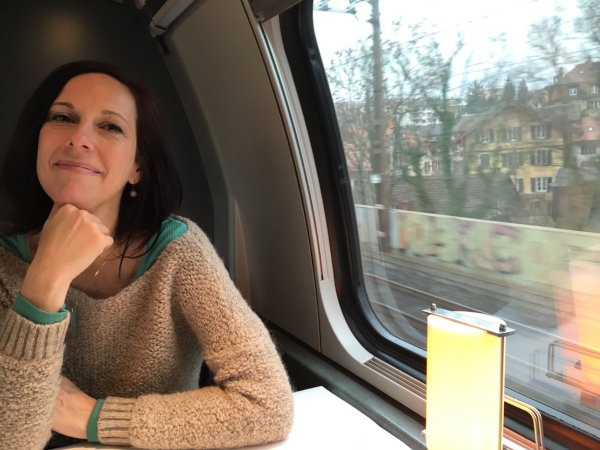
Lisa DiMatteo joins me to discuss the dance between “being & doing” and “enoughness” against the backdrop of a three week solitude retreat I experienced in October 2021.
Podcast: Download
Subscribe: Apple Podcasts | Android
Conversation Highlights
- Lisa and I have never been in the same room, yet we connected right away
- What I learned from three weeks of solitude
- “Being” as something other than the opposite of action
- A heart at war shows up as judgment
- The reasons we tell ourselves we can’t step away: time, commitments, inconvenience to others
- Internal Family Systems and the 8 C’s
- Why I’m less interested in separating being from doing
- What we do is most often driven by what we believe
- How do you know when it’s “enough”? Time and money as the two biggest scarcity stories
More About Lisa DiMatteo
Related Episodes
- No-fly Zone Safari with Lisa DiMatteo (111) — Lisa and I go back for a second conversation
- More Being and Less Reading (89) — more being and less reading
- Slowing Down More (113) — slowing down more
Credits
All songs licensed under Creative Commons
Transcript
This transcript was created automatically and may contain small errors.
John: Alright. Today I’m having a conversation with Lisa DiMatteo. We had a number of conversations and interactions in a previous— I was gonna say previous life. We could call it a workplace. Oh, it feels like a previous life. It was a long time ago. Not that long ago. Anyway, it was at Capital One in their money coaching program, and Lisa represented the East Coast and I was on the West Coast. We’ve never met in person, but we facilitated a couple workshops together and were in a lot of coaching meetings and circles and stuff together. And I knew that one day we were going to podcast on something, but I didn’t know what it was going to be. I’m still not quite sure what it’s going to be. So here we are. Welcome aboard, Lisa.
Lisa: Thanks, John.
John: Oh, and you’re supposed to tell us a little bit about yourself. I guess I, I forgot that part too.
Lisa: Oh, ho-dee-hum. Must I?
John: You don’t have to. We can skip that part if you want.
Lisa: Yeah. I mean, I think apparently I’m the post-employment friend of yours. We’ve never actually been in the same physical space together, which blows my mind. I thought we had, but I think that one summit that you were at, I wasn’t. So, Right. I never would have guessed that. So I’m a fellow coach human on this planet, also credentialed by the ICF, so AKA a professional coach among coaches like yourself, and excited to have this conversation today. It’s been a long time coming.
John: Yes. In fact, we, we had sort of a pre Something like, I guess a week ago or so ago, we’ve been throwing around some different things and, um, it had kind of come out of— I had mentioned to you, you know, sometimes on these podcasts I’ll do a like, here’s what’s been going on, and then I say what’s been going on. But I haven’t done that in the longest time because it felt like it was getting more and more complicated to say. And so I, I recorded something on that which made it sound like I had this big reveal, which I really don’t. But I thought there was something fascinating that came from our conversation about, I don’t know, I guess just taking the first step. And then I had this book I’ve been reading called The High Five Habit. And in that book, kind of in my recent, most recent reading of it, there was this idea of if you don’t take action, you’re never going to get anywhere and you’re going to be stuck for the rest of your life. And then when I played with that, I was like, I don’t know if this is completely true. So I wanted to throw that to you as kind of a starting point here. What do you think of this whole idea that you don’t necessarily have to be taking action to actually be making forward progress?
Lisa: Yeah, this is a very alive topic in my life at this time. But if I may just kind of back us up to what you said, About intimating that there was a big reveal coming from you. I listened to that piece and I— Did it seem that way? Well, not exactly to me because we had talked and so I kind of knew what you were holding, but I could imagine for somebody that didn’t have that, wasn’t part of our conversation, they might be like, what is he talking about? And I can I guess the thing I want to bring up there is that sometimes we can feel like it can feel like a big reveal to us, right? Because hopefully I’m not revealing too much or stuff that you don’t want to reveal. Of course, you can edit this out, but—
John: No, as you know, it’s funny, as you’re saying, why don’t I just tell people? So here’s what, here’s what it is. I’ve had some health stuff. And I just drank some water and it went down the wrong way while I was on mute and you were talking. I don’t know, maybe we’ll leave this in.
Lisa: That wasn’t like creative license to go along with your statement?
John: No, no, no.
Lisa: I’ve had some health stuff.
John: No, um, no, I’ve had some health stuff over the last, um, year and a half, and it’s, it’s not life or death, but it’s been Super challenging. And then more recently, I did a 3-week solitude retreat where I learned any number of little and big things. And I don’t know, I guess I feel like between the combination of those 2 things, and that’s where just starting to talk about it with you just freed up so much stuff in terms of like, oh, there is a lot of inner Intertangled or intertwined things here. And I think you’re— the best comment you made was something like, well, maybe, maybe you just do it in tiny pieces, or maybe you don’t do it at all, or maybe it’s just— maybe it just happens when it happens. And so I have a point I’m getting to here, which was trying to figure out like when that time is or isn’t can be really a lot of the tension. So that’s what we’re talking around. There it is. Hopefully I didn’t lose my 5 remaining listeners. So back to you,
Lisa: John. Do you think that that’s because it’s the experience that lives within you?
John: This be, um, the experience of like my 3-week thing or my health stuff or all of it?
Lisa: Yes, all of it.
John: Yeah, yeah, maybe so, maybe so. And I think also it’s the recovering project manager in me that wants things to be sequential and linear, and I want to connect all the dots. And I don’t want to get into all this today, but when you spend 3 weeks by yourself and you write over 300 pages by hand, there’s really no way to summarize it. So yeah, I think it’s, it’s my ongoing lived experience. It’s all complicated. It all ties together in some way that makes sense to me that I can’t quite articulate. And yes.
Lisa: Yeah. Well, these, these experiences that you’ve had, you know, the 3-week retreat and the health journey that you’ve been on, Are these experiences that you’ve ever had before in your life?
John: No.
Lisa: Okay. Is
John: that a rhetorical coaching question?
Lisa: Well, no, because as we know, yes or no questions are not our favorite questions as coaches. But it sounds like what I’m hearing you say, to sound like a coach, I’m joking. These are significant experiences that you’ve had, even if they haven’t manifested into like really clear outward outcomes. Sort of like, I don’t know, like eating a large meal or changing your diet somehow.
John: Oh, like the story is still being written.
Lisa: Um, yeah, or let, let me, let me just throw a word into the space and see where it lands. Integrating.
John: Yeah, integrating. I think for me it’s this probably bogus belief that there’s a big bang at the end. You know, you spend 3 weeks by yourself and then you have your first 7-figure year, or You know, like, there’s this big miraculous change, and what if there’s like 100 mini miraculous changes but there’s not one big miraculous change?
Lisa: What if?
John: Yeah, well, that’s what happened.
Lisa: I don’t know, I wonder if it’s like, um, when people do things they’ve never done before, right? Like I have never done this and I’m probably never going to, but like jumping out of an airplane, you know, I think people have these expectations about the experience they’re going to have or how it might shift who they are in the world. And I wonder how many people listening to this have spent 3 weeks in isolation.
John: Hmm. I don’t know if you’re out there. It’d be fun to compare notes. Yeah.
Lisa: Yeah. But, but back to this, this like comment of being versus doing, and also like the topic of you having this experience and feeling like compelled to see or feel an experience and/or share an experience. I think that there’s a lot of pressure sometimes. I don’t know where it comes from, but I know that we, as humans, tend to put it on ourselves that when we clear the decks in our life for an experience of being, right? Like you were being for 3 weeks. Yeah. Creating, clearing the decks to make that happen is actually doing, actually.
John: A lot of it. Oh my gosh. Yes. For real.
Lisa: Yeah. I mean, what, what, what had to be possible for you to have this experience? What needed to be done to have this experience?
John: Well, mostly agreement, buy-in, support from my wife, and clearing my calendar. And clearing my— now we’re getting into it. Clearing my calendar was actually, like, way easier than I thought it was going to be. But again, that could be a separate— I feel like we’re drifting from our original topic, and maybe I gotta just let that go.
Lisa: Or bring it back and let’s see where it takes us.
John: Okay. Um, so yes, to answer your question, yes, there was a lot of There was a lot of— so this notion of being and doing, maybe that’s not familiar to some people. It’s the idea of action versus— how would you describe being?
Lisa: Well, that’s a great question. I just
John: feel like I intuitively know what it is, but then I was like, wait, if doing is action, that’s easy. But what is being?
Lisa: Well, let’s, let’s sound it out because I bet that it’s different for everybody. And I’m not sure that I have a great explanation because I don’t— I’m not sure this is— get ready for this. I’m not sure that I do, I do enough being.
John: Hmm.
Lisa: Get your head around that one. Um, what if we just play with it first as the idea? I think it’s way more than this, but what if we just play with it as the idea of like, It’s the opposite of action.
John: Yeah, I guess I was thinking stopping. Stop. Yeah. Hmm. But that’s— but this actually takes us back to this thing that I was kind of annoyed with, a little annoyed with, a little bit like, wait, this is too black and white. When Mel Robbins is saying in this book, you know, if you don’t take any actions, nothing’s ever going to change. And feeling like, well, What does that really mean? Maybe it’s more complicated than that.
Lisa: Yeah, I’m sure we could sit here for the next however many minutes and split hairs about that. I’m sure that people will change the channel pretty quick. Um, I, you know, I’m thinking about in my own coaching practice, how I talk about the difference between being and doing, and, and I don’t define it. Um, otherwise I’m sure I would have had something to serve up for you, but Here’s a thing that I want to throw out. You know, oftentimes people will hire a coach or a therapist or some other person. They’ll go to some other person to figure out what it is they’re supposed to do, what they’re going to do, right? Because it’s so much easier to have that experience outside of us than it is for us to jump inside of our own intelligence and figure that out, right?
John: Yes.
Lisa: So that Staples easy button. Um, I think what’s interesting is the process of coaching. And this gets revealed to anybody who has experienced coaching, um, pretty quickly. This, the, the experience of coaching helps us explore the be. So, um, how are we being right now? Right. And let me— I’m just going to put words to it just so maybe this helps define it. Well, I’m being resistant. I’m being scared. I’m being stubborn. How do you want to be? Well, I want to be motivated. I want to be courageous. And I want to be excited. Okay. So those are like all B words. Then we explore what the doing might look like in order to get to how we want to be. Now, that’s just one way of, I don’t know, having a coaching conversation, but in the coaching conversations that we have, and tell me if this is true for you, John, because I’m just speaking about some of the experiences that I’ve had, there is a distinction. Between the be and the do, and that I like to say that we can do anything. I mean, we can get up, you know, God willing, on any given day and make something happen. But what’s the thing we want to make happen? And that do, that thing that we’re going to do, can be best informed When we explore the be.
John: Yes. Or I would say like who we are being. Yeah. Hmm.
Lisa: Who we want to be. Yeah.
John: And I guess I must directly relate to this from actually being coached and like a very specific situation I’m thinking of where I wanted, I wanted a different relationship with a particular person in a particular context. And it really came down to who I was being, not what I was doing. And that— okay, if you want to tie it to coaching, that’s what I find. People come to me, they’re like, well, you know, I just, I want some tips and tricks on, you know, how to have a better conversation with this coworker, you know, and so that they will do this, so that basically things will be different or it’ll be easier to work with them or we’ll finish this project. And then the challenge of— but I guess what I’ve seen over and over again is it’s who I’m being in that situation. It’s not so much what I’m doing. In other words, am I, you know— Right. Following the nonviolent communication formula to the T? You could be masterful at, like, following, you know, active listening or crucial conversations. But if I’m being a jackass, it’s probably not going to work.
Lisa: Mm-hmm. What defines or dictates how you be? Oh,
John: I think it’s your heart.
Lisa: Yeah.
John: And for me, that’s the, like, the crux of it. Like, what’s in my heart? I think of it kind of as coming from, from the book The Anatomy of Peace. Am I coming from a heart at peace or a heart at war? Heart at peace tends to contain love and openness and possibility and acceptance. And the heart at war is judgment. You’re wrong.
Lisa: Uh-huh.
John: Uh-huh. Uh, maybe some victim energy. Like, it’s It usually doesn’t turn out very well, if ever.
Lisa: Yeah. Yeah. So that’s interesting because, you know, one of the things that we do as coaches is we help people explore what they believe, right? So this will tie into what you just said. Like, I was getting ready to disagree with you and then—
John: Oh no, that would have been more interesting.
Lisa: Well, I was getting ready to bust in like, I disagree. However, when you brought up those 2 concepts in Anatomy of Peace, I can’t debate those because I think that even though there are things that get in the way of our heart— okay, actually let me say it this way. There are things that get in the way of our heart, right? So even if our heart in its purest form is these things, peaceful, loving, open, generous, like all the things that you want it to be. In its purest form, when something gets in the way of that, we can say that’s the heart at war. Right? So, for example, I don’t know how real to make this, but is there an example that you have that you want to work with here?
John: Hmm, like a current one?
Lisa: Yeah.
John: Wait, what are we work? What are we working with? Like my past? My past. My past example, I, I can’t share.
Lisa: Okay. How about the one that’s related to what you’ve been up to?
John: I could— well, I’m trying to think back to this other one, if I could abstract it a little bit. Now I might be able to. I don’t know what— play with either one. Go, go wherever you wanted to go.
Lisa: Cool. So let’s, let’s go to the 3 weeks away.
John: Alright.
Lisa: When the, when the idea of the 3 weeks away first came into your orbit, what were your first thoughts?
John: Oh my gosh, that’s so cool. I would totally love to do that, but I can’t. It’s not possible.
Lisa: Right. So your belief was that it wasn’t possible. And were there specific beliefs around it’s not possible?
John: Oh yeah. Uh, time, money, um, commitments, inconvenience to other people.
Lisa: I don’t have the time. I don’t have the money. I have too many commitments. It’s going to inconvenience other people. Is that what you Well, yes. Okay. Okay. Yeah. And so—
John: And then each of them fell away in different ways. Well, it was a combination of 2 things, though. This is fascinating. It was a combination of like certain things fell away or were naturally going to be taken care of. And there was a point where I had to make a commitment. And it was really— it was difficult. There was a moment of like, how bad do I— do I really want this? And then I had to say, okay, I really want this. This is scary. This may not be able to take place because, you know, this health thing I have going on could interrupt it in some way. And then I’ll get my hopes up and my whatever, and this won’t happen. But at a certain point, I had to just go all in, like all in, all in. And one of them— and the way I went all in was, I think, trying to remember when I decided. I feel like I decided. somewhere in August that I was going to do this thing for the month of October, I immediately started telling people I was gone for the whole month of October.
Lisa: What were the qualities present in your heart when you started to do that?
John: Hmm, I feel like it’s different because it was a— it wasn’t towards a person, it was towards a thing. Um, there was fear. There was definitely fear. Mm-hmm. Which I think is interesting, fear being the opposite of love, if you subscribe to that. There was also a level of maybe certainty, clarity, like, okay, I’m all in on this until something tells me that it’s not gonna work, or that it’s just like, I’m gonna, I’m gonna make this as possible as I can make it until it shows itself that it’s not.
Lisa: Yeah.
John: Now, some of this was also in partnership with my coach, who was also like, in this amazing way, was just like, I am all in on this with you. We’re gonna like— I will do whatever I can to make sure that this is possible for you too. So I had a— I guess I had like a, a co-pilot, sort of. And then my wife being just like, yes, I 100% support this. Yes, it will be challenging at home. And yes, I totally want you to do this because I know like how much you love this kind of stuff and want to do it.
Lisa: Yeah. So I heard confidence was in your heart, clarity was in your heart, and what was happening to those beliefs that you mentioned at the beginning? Like, I had to ignore some
John: of them. I mean, I almost had to set them aside. It’s like these— the
Lisa: Were you questioning them?
John: I don’t know. No, I almost— like the money side of like, oh, you know, I’m not actively working, earning money during that time. Will that be okay? Nothing bad has happened. You know, there’s still money in the bank. So, you know, that could take years to play out to know if it was really a bad idea. I don’t know.
Lisa: I’m hearing courage. So—
John: Yeah, and it’s so funny because I have such a courage— I don’t— I’m not sure I believe in courage. I believe it, and I’m stealing this from Rick Tamlyn, who was— it was this idea of people look to find courage, and he’s like, he’s like, no, it’s about commitment. So I feel like for me, I was so committed that I, I was still scared, but I didn’t— I just kind of overrode it. I was more committed than I was scared.
Lisa: Can I offer you another package for that?
John: Sure.
Lisa: Yeah. Um, because we’re really talking around some material that I think is, is fabulous. It doesn’t originate with me, but it’s material that I coach around quite a lot. Sometimes I refer to myself as a self-leadership coach and, um, uh, through The original source is Internal Family Systems. Oh
John: my gosh, I keep hearing about that everywhere.
Lisa: Well, here it is again. Here it is again.
John: Are we going to talk about parts? Well, I’m joking. I’m joking because I sort of get the parts thing and I sort of don’t. And I— yeah, keep going.
Lisa: Well, you know, Internal Family Systems is I don’t know, it’s like a system developed by Richard Schwartz. And he has this model that basically describes what self-leadership looks like. So how one healthy adult can, with many parts, can lead themselves through their life. And he basically says there’s 8 C’s The letter C of self-leadership. And we’re talking around a whole bunch of them right now.
John: Really?
Lisa: Oh yeah.
John: Okay. What are they? Tell us.
Lisa: Well, so I’ll just mention the ones that we’ve already spoken about. Right. Um, and I know you said you’re not, you’re not sure you believe in it, but courage, there’s courage. Right. And, uh, you talked about, uh, clarity. You talked about being connected. And what was the other one? We already— can we back that recording up? I forget already. But I can’t remember now. In any case, the 8 Cs of self-leadership can help us be more of who we want to be, right? And, and come from our heart more the way we want to come from. So, what the heck was it? I’m just gonna say the 8 C’s just so that, just so that maybe you’ll remember what it is. Calmness, clarity, curiosity, Compassion, confidence, courage, creativity, and connectedness.
John: I wonder if it’s confidence. What’s funny is I don’t remember feeling confident. I remember just being like, I’m just committed to this. Still scary. Let’s do it.
Lisa: Yeah, but related in relationship to those beliefs you had. Like, I feel like your beliefs were saying, eh, no can do. And then the circumstances around you were like beginning to debate those beliefs. Those beliefs were hard to hold up in the face of what was materializing around you.
John: Yeah. Yeah. It was kind of funny. There was a, there was even a sense of disbelief when I finally went. Like, am I really doing this? Is this really happening? Surely something will get in the way.
Lisa: Yeah. Well, let me present my idea on that, because I think what you did is a really radical act, John, if you haven’t already figured this out.
John: No, of course not. I’m too hard on myself.
Lisa: Just like, listeners, imagine wiping everything off your calendar for 3 weeks. Imagine leaving your spouse, your child, your home, your regular life as you know it for 3 weeks to go into a cabin or a trailer or whatever place of lodging in the wilderness where— and I’m going to say the biggest piece of this now— there’s no internet. No internet. No. There’s no internet. You show up.
John: There’s no input. There’s no inputs. That’s what I like to tell people. There’s no inputs.
Lisa: Aside from food. Aside from the inputs that keep you alive.
John: Yes, food. And there is food and water, but there’s no reading materials. There’s no books to read. There’s no internet. There’s no phone, no computer. Yes. There’s no paper. No,
Lisa: there’s no email. There’s no chores to do except the ones that keep you alive.
John: Right. There are no interruptions except the ones that you create for yourself.
Lisa: Yeah. And so back to— so we’re starting to reveal a little bit more about your experience, right? And back to the question that you, that you posed at the very beginning of our conversation, this be versus do. Right? You took 3 weeks out of your life to be, yet there’s, there’s still a, like, some doing.
John: There was. No, I love that. There was— no, there was a definite, there was a definite dance of being. Oh, I’m sitting here looking out the window at that tree. Oh, I’m sitting here thinking about
Lisa: Something. Did you really dance, or is that just a term you’re using?
John: Uh, I’m trying to think. I don’t think I did any dancing, no.
Lisa: Okay. I
John: didn’t have any music either.
Lisa: What did you do? Literally, what did you do?
John: So I ate food, I drank water.
Lisa: I— did you cook your food?
John: I cooked my food, uh, because I was by myself in this little house. I sat a lot in this one chair looking out this one window out at the woods. I— there was also— so it was in this little— in this living room there was a chair and a couple couches. So I would sit in one of the chairs in particular, and I laid on this other couch in particular and looked out the window and often fell asleep there.
Lisa: Mm-hmm.
John: So I was either doing that, those 2 activities. I was writing. Sometimes I was crying. Sometimes I was talking out loud. Sometimes I was yelling.
Lisa: Um, did you brush your teeth?
John: Brush my teeth. I slept. That was so— so people wonder, like, what was the hardest part? For me, the hardest part of the whole 3 weeks was sleeping, not like during the day, but that’s a whole nother thing. So, but, but back to the being and the doing. So I would do these, quote, being activities, but then there was an There was— it got to a point where, okay, there needs to be some doing. I’m hungry. So then I would get up and make something, or I’m tired of being inside. I’m going to go outside. So then I would step outside and walk into the woods a little bit and then walk back. So I would, I would think of that as doing. And the two informed each other, definitely.
Lisa: Yeah. Yeah. So I, As you’re saying this, I notice personally that I’m a little bit less interested in separating the being from the doing and just like absorbing the list of things that you just described that you did. Right. And point out that those exact things, those things that you did, the cooking, the walking, The watching, the sleeping, the writing. If, if you rewound the clock a year before this time and looked at your life a year ago, how much value would you place on those things in your life a year prior? Oh, I would.
John: I’m not sure I understand the question. How much value would I place on the things that I was doing?
Lisa: Yeah, actually, let me just— I’m, I’m, I’m having you try to make a point for me, but I can make it myself.
John: I love it. And I didn’t do very well.
Lisa: That’s okay, that’s okay. I actually kind of confused myself when I could have just said what I’m thinking, which is, I think that you spent time for 3 weeks in this cabin doing things that we in this society don’t place a lot of value on. Yeah, they’re very important things.
John: No, and I place high value on them. I always have. And so the opportunity to do them uninterrupted for 3 weeks was like, Whoa, can I do that? Will I go crazy? Will I like it? Like, what will happen? Yeah.
Lisa: Yeah. I love that you said that. I love that you said you place high value on them. I’m going to present a slightly different opinion. I mean, okay, I place high value on those things, but next to other things, they would tend to fade away. Let me give you an example of what I mean. In a busy 24-hour day, You know, a year ago, I seemed to put 100 other doing things ahead of those very basic activities. So, you know, we all need to eat to live. But, you know, I would forget to eat, or I would say, I don’t have time to cook myself a meal, so I’m going to grab a meal over here. And I don’t have time to sit down and focus on eating that meal, like, in a calm way. I’m going to swallow this meal whole. And, you know, I’m going to run to the next thing before I’m even digest— you know, give myself space to digest this thing. And it’s like, you know, we all have the same 24 hours in a day. We all need to do a certain amount of things to Live. But it’s funny how I think, and I don’t think I’m alone here because I see people eating fast food in their cars. You know, like, I think we— it can be a radical act to say, oh my God, in my day, I’m going to block off half an hour or an hour to eat a meal, to cook a meal and eat a meal, to cook a meal and eat a meal with my family, to cook a meal, eat a meal with my family and have a conversation. Like, I just don’t think that our culture places a lot of— prioritizes that. Let me say that.
John: So it sounds like you’ve really slowed down.
Lisa: I have. And it’s not that easy because we make habits out of our behaviors, right? And our belief and our behaviors, what we do is most often driven by what we believe. So for a really long time, I’ve believed there isn’t time for that. There isn’t time for that. There isn’t time for that. There isn’t time for that. So even when suddenly all I have is time, It’s hard for sort of the body memory to slow down and create the space for that thing. Sort of like being on autopilot, right? How do you change the program? Well, you change the program, not necessarily by changing what you do or how you be, but what you believe. And so what I’m getting at is You know, coming back to your experience, when this 3-week retreat was proposed to you, your autopilot said, no, not enough time, not enough money, not enough resources, too much of a drain on my family. Autopilot shut that down. But there was an opening there. It was enough of an opening there for you that those beliefs got challenged by the outside circumstances in your life.
John: Mm-hmm.
Lisa: And you had to bring some ingredients. I’ll propose you brought some of those C’s to bear to make this happen. You got creative, like, alright, maybe I’m gonna, I’m gonna Believe that this is possible, right? It takes a little bit of creativity to challenge our belief, our instant belief. You had to bring into some courage, like, yeah, I’m gonna— I am gonna lean into the resources that are being provided to me to make this happen. You brought confidence, like, I can totally do this, right? You probably brought curiosity, like, geez, I wonder what this is going to be like. I wonder what’s going to happen while I’m gone. And I still hear you, like, I wonder what is going to happen in my life because I did this. And I hear you searching for the clarity of that. Like, what is the clarity that’s coming out of here, out of this experience?
John: And trying to let go of it at the same time. Like, in other words, I went into it trying not to expect certain things, which is difficult to do. And then I tried to go into it not expecting anything to come out either. And yet there still was sort of this sense of like something will. And there were lots of things that came out of it, but yeah, they’re still unfolding.
Lisa: Yeah. And when you say that they’re still unfolding, I hear, and perhaps because I’m, I’m privy to the wider conversation around this that you and I have had, I hear confidence. that it will all reveal itself in right time.
John: Mostly. In my best moments, let’s put it that way. Yes.
Lisa: I mean, it’s not like you’re booked with Oprah next month to debrief the experience.
John: No, no.
Lisa: It would be cool if you were, and I think it would make a great episode. But, you know, the story will write itself across time. Yeah.
John: Mm-hmm. No, it will.
Lisa: What is it right now? Like, I mean, okay, sorry, no pressure, John. Um, what’s the story right now? Um, let’s— but I am a little curious, like, if, if there were a headline or a couple of headlines, what comes to mind?
John: Something around resilience. I feel like it, it increased my resilience. Although I’m in a— it’s funny, I’m in a state or a space today where resilience is much lower than I would like it to be. So I guess one of the things that surprised me the most exiting this experience was how long the experience stayed with me. But I feel like as more time goes by, the more it feels like it’s starting to fade away.
Lisa: Hmm.
John: It’s been 7 or 8 weeks. I’m not Yeah, roughly 7 or 8 weeks since I had it.
Lisa: Mm-hmm.
John: Yes, I feel like there’s something around resilience. And when you spend that much time by yourself just kind of being and doing, you just— you’re just constantly practicing rolling with what is. Because nothing is— the only thing that’s getting added is whatever you’re adding to it. There’s no— there are very few external
Lisa: Yeah. Well, and it sounds like all the things that you would add in a normal day are off the table.
John: Yes. Yes. Yeah. So, yeah, I don’t, I don’t even know that I have a headline. All I’m accessing in this moment is something around resilience and centeredness and just being with each moment.
Lisa: Yeah. Well, that sounds pretty delicious because I think that most of us, you know, really yearn for that. And a day-to-day. And isn’t it interesting that you got to feast on that experience in a way?
John: Yeah. And that, this actually reminds me of, because like in this moment, I’m wondering if you find this is true. And people talk about how the holidays are so something. I find, I’m curious if you relate to this. And if you have any tips and tricks or ideas. I find that something— there’s something about from Thanksgiving to New Year’s that often just turns into a Twilight Zone of activities, looking for presents for people, planning trips. Just, I don’t know, just things just seem to get kind of out of whack. And every year, I feel like the last 2 or 3 years, I consciously, I’m like, oh yeah, it’s gonna be that time of the year. It’s gonna be different this year. And I’m finding myself like right in the middle of it again. And I was like, I don’t like this. And then I had the presence of mind a couple days ago to be like, well, what would it look like to just be with what is? You don’t like this. Just like, well, what would that be? What could that look like? So yeah, I don’t know. I’m just, I’m wondering, do you experience the same thing during this quote time of the year? And do you have any, have you found any ways of making it different?
Lisa: Yeah. Um, well, I have some thoughts and, um, the first is like, I always wonder if those people who get their holiday shopping, for those who participate in such things, but those people that get it done in August, right? That you hate, if they have a different experience, if they have, that they’re having the secret experience that you want to have. And my guess is, this is the script I’m going to write. I don’t think so, because here’s, here’s what I think. Our culture is infused with so much energy of should, right? There’s always something that you should be doing. So let’s say you’re that person who got everything done in August. You know, you pre-ordered, you know, all your ham or whatever it is that, you know, you eat. You got everybody, you got all the stocking stuff, everything’s done, you know, and yet it’s December 15th and you’re like, do I have enough? Did I buy enough of this? Did I get enough of that? Is there going to be like this question of enough?
John: Yeah. Is this enough of a present for this person?
Lisa: Yes. Yes. You know, I do wanna just take a second to tie that back to like, many of us suffer from a belief of not enough, right? And that, I don’t care how much we’ve done in advance, we will always have that and we’ll keep our mind preoccupied and keep us running around, even if it’s just in our mind with enoughness. But I think there’s, that’s one of the things that comes up. And, you know, I have had a lot of time this year, so I’m next to done with everything that I need to do for this, for the shopping, quote unquote, traditions of, of the holiday as I celebrate it. But I’m noticing my mind is still churning around, right? So I think that There’s always a gap between what we would maybe prefer, the way we might prefer to celebrate, and the way that we feel like we have to because that’s tradition or because that’s the way the people around us are or because there’s some cultural idea out there that’s invisible. We couldn’t point to it if we tried, but it’s just there. And also, you know, it’s this liminal space of the year. it’s this like, you know, I’m kind of trying to wrap up my business for the year while like doing a really good job, doing a really good job at celebrating because you don’t want to fail at celebrating. You know, it’s like there’s these crazy pressures. And also one other thing I want to point out is, you know, like you were saying, you were in this cabin and there, there wasn’t there wasn’t any inputs except the ones that keep you alive. There are so many inputs this time of year, and many of them go well beyond the inputs we need to keep us alive. In fact, some of the inputs will kill us if we’re not careful. So it’s just a lot. I think it’s really a lot. And I, I’ve never been on a cruise and I probably won’t be on one. Um, but you know, people talk about those all-you-can-eat buffets that happen like at midnight. And that might be the reason why I don’t go on one, because I just do not trust myself not to like eat myself into oblivion. But you know, it’s like this time of year is like one of those buffets. Everything is available. So much is available. And how do we not? Eat ourselves into oblivion.
John: I feel like should is— that, that was such a great observation. Yes, I think from my— I think it’s the shouldness. And then there’s— I think there’s also an aspect of, yeah, should in the present, like how the present is supposed to be. And then, like, I don’t have any type of deeply traumatic past or childhood, but it brings up, like, I don’t know, all kinds of memories of past holidays and where I was and what I did and Yeah. So I don’t know, that just jumped out at me too.
Lisa: I remember when I was a kid, we had very rich holiday experiences. And I remember one year being sad and it was because Santa didn’t bring the kinds of things that I wanted. I thought it shouldn’t have been this way. It should have been that way, right? That’s where it all begins. That is where it all begins. So, John, I wanna, I, I just wanna come back to like this cabin. Yeah. I might just be saying I wanna have that experience, but like, what were the shoulds there? It strikes me as they must have been very different than the shoulds in your regular life.
John: There almost weren’t any. I’m trying to think in this moment, and I feel a little bit on the spot. Mm-hmm. I can’t think of any. I really can’t.
Lisa: I mean, did you think I should eat now or I should go for a walk or—
John: No, in fact, I threw all that away. I— and even my eating, because my eating was kind of— that could be a whole hour-long fascinating conversation. Like, the first week I was eating all the time, and I remember writing to my mom, I thought, I’m gonna be a complete whale when I leave here. Like, but I, I was able, like, after a couple of days just to say, you know what, don’t worry about that. Just be here. Just, just, you know, don’t overindulge yourself per se, but if you’re hungry and that sounds good, eat it and then stop. So, you know, because I had like, I had regular meals, but then I had snacks and, you know, just so it’s like, oh, but it’s, you know, 11 o’clock, I shouldn’t be having a snack that might ruin my lunch. It’s like, just have the snack. Then I ate lunch at 2 instead of 12, and it was like, so what? So I think that, that maybe that was one of the beautiful things of this experience that I didn’t realize till you asked, was there was space and freedom for everything. Like nothing— it was almost like nothing could be wrong.
Lisa: A drastic drop in the amount of shoulds in your experience.
John: Yes, yes, yeah. I mean, there was maybe there was a little shoulds around, like there were some guidelines given in terms of not going on super long walks and like interacting with people or not going to the store. And like, this was all by design. And so I guess there was a notion of like, I should follow the guidelines, but I wanted to follow the guidelines because I wanted to have the full experience. Well, maybe I think in the first few days, in fact, I had one which was, you know, you should not take a nap. Because that would maybe be wasting time, slash checking out, slash then you really won’t be able to sleep tonight. But then at a certain point, I was just like, who cares? Like, because there’s the, the magic of the experience is there’s infinite time for whatever is going to happen. Even if I felt like, oh my gosh, there’s a lot to write about in this moment, it was like, well, so what? It’s 8 AM. You can write until 8 PM if you need to. And yeah, there was always enough time for whatever.
Lisa: Yeah. And do you feel that way in your regular life?
John: No. And I wish that was— that was— we probably need to start wrapping up, but that was like one of my revelations about halfway through or 3/4 of the way through was there’s always enough time for what I need. There’s always enough time. And I did have this realization or revelation of what if regular life is really this way too? I’m too busy, quote busy, or too distracted, or I have too many— too much stuff coming at me to realize that that’s always true and that there’s nothing special about this place or this experience. This is always happening. It’s just covered up in all this stuff back home.
Lisa: Yeah, yeah. I think this is, this is The diamond of the conversation right here, because we started with being versus doing. And, you know, this idea of this experience that you went on, that as we talk about it, right, and hopefully, hopefully there are some clear images for people who are listening about your experience, even if they don’t understand the bigger picture around it. It’s a radical act. Right? It’s what you did brought into question the way that you spend the time in your life. And as I hear you starting to wrap up here, you’re like, well, it is questionable. And I do get to choose. Right. And it brings this other topic up that I just want to toss into the space, right? You started with being versus doing. And, and, you know, it’s interesting that you and I met each other in the context of coaching both the public and inside this large organization in which we worked on the, on the topic of relationship with money. And, you know, this is an area that I love. to work in. And I continue to do so because I think it’s a very powerful indoor. It leads everywhere. And what you’re describing is this idea of scarcity versus abundance.
John: Yes. Yes.
Lisa: Right. On anything, like just pulling up some of the themes you mentioned, like, I don’t have enough time in my life to do this. I don’t have enough resources. There isn’t enough people to support me. There isn’t enough money to pay for it. There isn’t enough time for me to stop being paid. There are all these beliefs. And even when you arrived there, you were battling with this scarcity and abundance. Right. And we all, I think, Okay, let me back up. Many of us deal with time trauma every day in our life. Do I have enough time to wash my hair and style it today, or should I just throw it up in a ponytail? You know, do I have enough time to cook myself a hot breakfast, or am I just going to grab a granola bar? You know, is there enough time for me to— is there enough? There isn’t enough. Is there enough? You know, and What about there’s enough of everything? There’s enough. I don’t know. Now I’m going to go all philosophical and I do not want to do that and lose anybody in this, in this, but like, think about the ways that scarcity and abundance actually influence how you be and what you do.
John: That’s beautiful. Yeah. And I guess along those lines, I would also A question I often ask clients is, how would you know it’s enough? Or how do you, how do you determine enough? And in a way, I would say this experience helped me to see what enough was around time.
Lisa: Yeah.
John: Even though time, time also had some very different dimensions there that I’d never experienced before too. Time, time went faster there than it did at home. It will be like, what?
Lisa: But without the internet?
John: Yeah. Yes, in a very strange way, the days went much faster than they do here. Hmm.
Lisa: So that’s interesting.
John: You know, probably— go ahead.
Lisa: No, I was gonna say, you know, one enough question I want to ask is If you have any through lines to Jeff Bezos, I want to ask, how much is enough? And how will you know? How will you know? What’s the evidence of that?
John: Right, right, right, right. Well, where can— well, first of all, thank you, thank you, thank you for doing this with me. Like I said, I had this idea, I don’t know, a year ago. I was like, I just feel like we could record a podcast on something. I have no idea what it would be, and I just love your way of pulling things apart and hearing what’s not being said and all that good stuff. So thank you.
Lisa: It was great fun. Thank you.
John: If people want more Lisa energy, insights, money coaching, whatever you’re doing these days, where would they find it to get more of it?
Lisa: Well, my booth of shameless self-promotion exists not at that cabin you were at, but on the internet. The name of my organization is called Your Vital Self. I love the concept of vitality. And so that’s where that comes from. So www.yourvitalself.com. Wonderful. yourvitalself.com and on Instagram @yourvitalself and on LinkedIn, all the places, Your Vital Self.
John: Alright, so if you, if you didn’t get any of that down and you can’t find it in the notes, just search for Your Vital Self and there you will see Lisa. Any parting closing words to be complete?
Lisa: Um, let’s see. I think I just want to invite anybody who’s hearing these words at this time to practice moving through the rest of their day with the idea that there’s enough time, there’s enough money. Those are the 2 biggest scarcity mentalities. Just try that on and see what—
John: I love that.
Lisa: I love that.
John: Yeah, and by try it on, if I can just expand that a little, people, that just means experiment. It just means hold the possibility. Yeah, act as if. Well, either act as if, or if you’re really cynical and skeptical, like sometimes that’s one of my superpowers, not so great, just ask yourself, what if it was possible? What if you could just allow a little bit of the possibility, just to like a 1% possibility that there is enough time and enough money. If you’re not willing to go there, just, just a tiny bit.
Lisa: Question your belief.
John: There we go.
Lisa: You can go back to it tomorrow.
John: That’s right, that’s right. You can return to full scarcity tomorrow. Thanks for listening to The John Poelstra Show. Notes, links, and all that other good stuff for this episode are at johnpoelstra.com/podcast. Send your questions, ideas, or a simple hello to REDACTED. Want to stay up to date on new episodes and receive notifications of upcoming events? Register your email address at johnpoelstra.com/updates.

1 Pingback